A Jersey banknote, an Egyptian pound and an English penny seem to speak a shared language. Yet they do not have the same issuer or the same history. Understanding this family means following two threads: the names that travel and the objects that each society chooses to make.
01 · Before the currency, a weight
A set of scales still lurks behind the word “pound”. The Latin libra meant a pound weight; its initial eventually became the £ sign. Counting money and weighing metal once belonged to the same world. But a unit recorded in an account was not necessarily a coin that could be put on a table.
The system of reckoning in pounds, shillings and pence developed in the Frankish world before crossing the Channel. In England, one pound meant twenty shillings, or two hundred and forty pence. For centuries the silver penny was the familiar coin, while the pound mainly expressed larger sums. Coin weights varied: two hundred and forty pennies did not invariably weigh one pound of silver. [1]
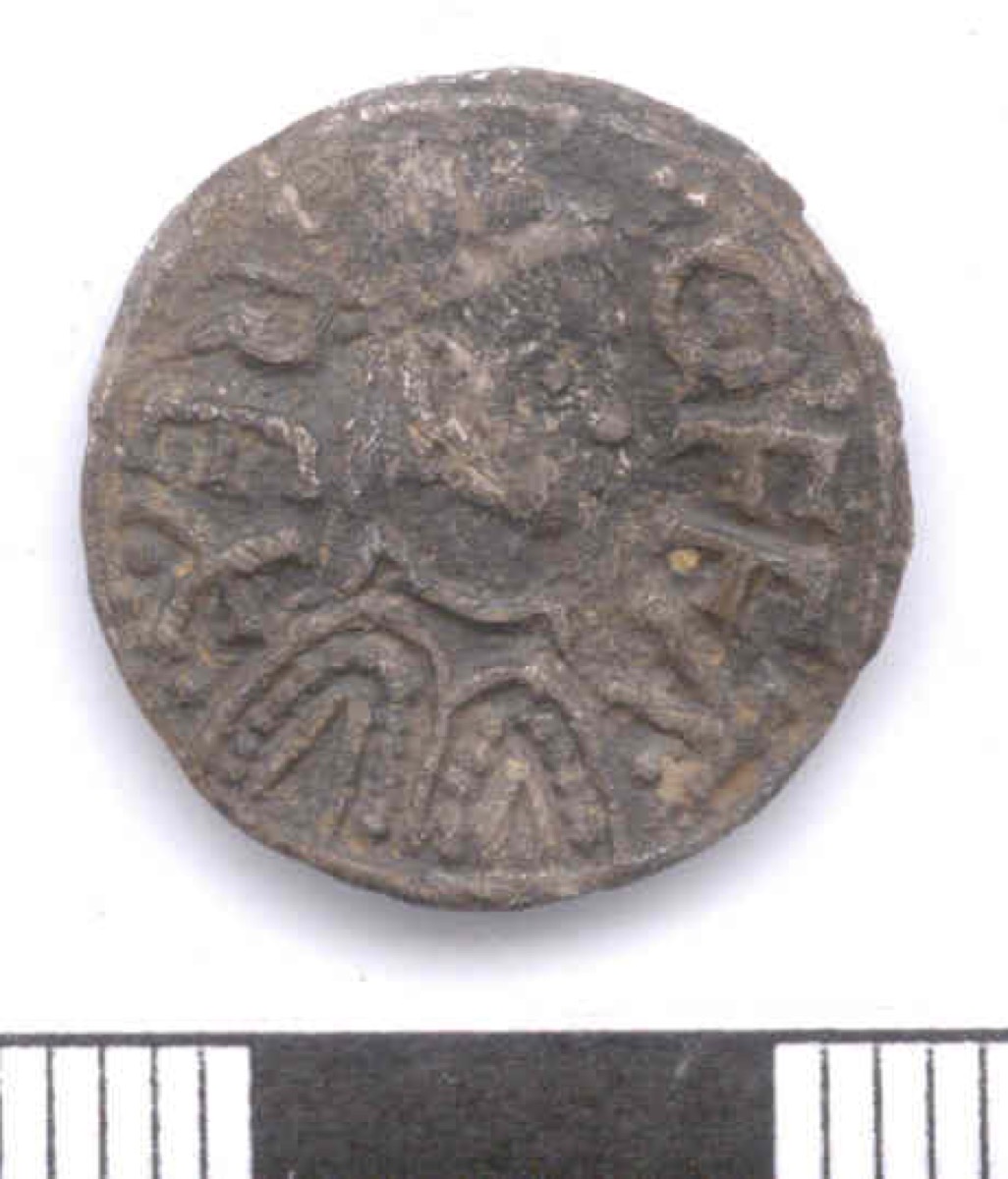

This distinction between a unit of account and a minted coin helps us read old records. A price in pounds does not prove that a pound coin circulated at that date. We must look at the object, its metal, its weight and the authority behind its value.
02 · Sterling: several revolutions under one name
Britain’s monetary history cannot be contained in a single coin. Gold sovereigns, small copper coins and banknotes met different needs: large payments, everyday shopping and the transfer of a claim. From 1694, the Bank of England’s early notes gave material form to a promise to pay. Amounts, signatures and names were initially completed by hand; the printed document gradually became more standardised. [2]
On 15 February 1971, change reached shop tills: one pound now contained one hundred new pence. Decimalisation transformed subdivisions and habits of calculation. It did not turn every pound into a different unit of value. Some decimal coins had already been introduced before the day itself to prepare the transition. [3]
Several issuers can still represent the same currency. Notes issued by authorised Scottish and Northern Irish banks are denominated in pounds sterling, like Bank of England notes, but have their own imagery. A different signature or portrait does not, by itself, mean a different currency. [4]
03 · Islands with signatures of their own
In the Channel Islands, Jersey and Guernsey tell a story of neighbours. Connections with the French coast, island institutions and the link to the British Crown intersect in units of account and coin inscriptions. Guernsey doubles and Jersey’s fractions of a shilling make these adjustments visible. The islands did not simply receive a finished model: they worked with several traditions.
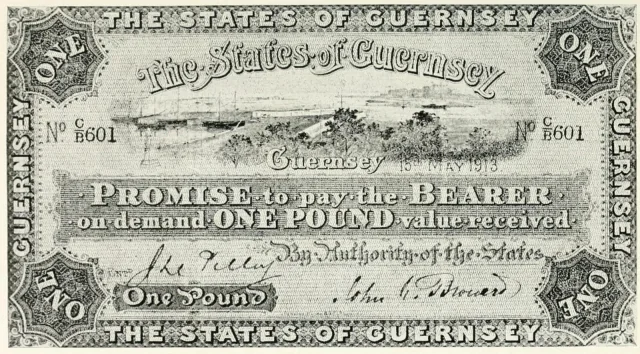
In Jersey, States notes issued during the Occupation answered a shortage of small change. Regular note issues resumed in 1963. Their landscapes and inscriptions give the island an everyday presence, while amounts remain at parity with sterling. [5]
Gibraltar, the Falkland Islands and St Helena also have local issues linked to sterling. Their histories are far from interchangeable. A port on the Strait, a southern archipelago and a South Atlantic calling point have different needs and memories. The following dossiers explore those paths, their first issues and the motifs selected to represent each territory.
04 · From the Nile to the Levant, other lineages
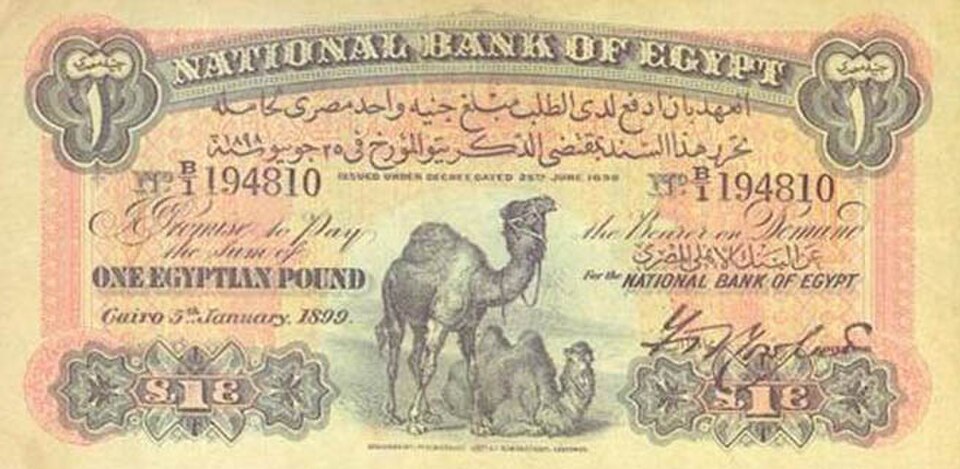
The English “pound” and French livre can translate monetary traditions that are not copies of London’s. The Egyptian pound emerged in Muhammad Ali’s Egypt. The Central Bank of Egypt distinguishes the decree of 1834 from minting and circulation in 1836. This predates the British occupation of 1882. Later British influences should not obscure that beginning. [6]

Lebanon’s story passes through Ottoman money, Egyptian issues and the French Mandate. The Lebanese-Syrian currency was linked to the French franc; successive agreements and institutions led to a national currency and the Banque du Liban. The name “pound” alone cannot reconstruct this lineage. Banknotes, their languages and the banks named on them are much more precise witnesses. [7]
Sudan and South Sudan contribute two distinct histories. In Sudan, the dinar introduced in 1992 gave way to a new pound in 2007, at one hundred dinars to one pound. In South Sudan, the national currency was introduced on 18 July 2011, after independence, replacing the Sudanese pound. These are different reforms, best understood through their institutions and the everyday experience of the people who used the money. [8] [9]
05 · What currencies choose to show
Money is also a small public space. A portrait asserts authority; a monument, an animal or a tool tells a story about a place. A design can remain while the metal changes. Conversely, a new image may mark a royal succession without changing the monetary unit.
A few questions help a coin or banknote reveal its story: who issued it? What denomination does it carry? In which language? What appears on the reverse? Does the date refer to an issue, a law or a commemoration? Photographs of both sides and precise captions prevent many misunderstandings.
That is the approach of this atlas: ten dossiers, each with its own narrative, objects and sources. They are not an exhaustive list of every currency ever called a pound. Historic portraits, withdrawn banknotes and commemorative issues illustrate the story; their inclusion does not mean that they are traded at the exchange counter.
Sources and further reading
Each territory’s dossier contains a fuller bibliography and image credits. Sources for this shared history:
- Royal Mint Museum — Pounds, Shillings and Pence.
- Bank of England Museum — Early banknotes.
- Royal Mint Museum — Decimalisation.
- Bank of England — Scottish and Northern Ireland banknotes.
- Government of Jersey — Currency history and issuance.
- Central Bank of Egypt — Banknote history.
- Banque du Liban — Historical development of the Lebanese pound.
- Central Bank of Sudan — Policies 2007.
- Bank of South Sudan — Bank notes.