In Juba in July 2011, independence also changed what people carried in their wallets. Notes issued from Khartoum were to give way to the currency of a new state: John Garang’s face on the front, and animals, landscapes and activities presenting a country on the back.
The South Sudanese pound, SSP, entered circulation on 18 July 2011, nine days after independence. Its story reaches further back: to older forms of exchange, currencies administered from Egypt and Sudan, and institutions developed during southern autonomy. The notes made a new sovereignty tangible, but the financial history behind them was already long. [1]
1. Before banknotes: different ways to reckon wealth
The territories that now form South Sudan do not share a single economic past. Pastoral societies, agricultural communities and settlements along river routes have different resources, networks and obligations. Searching for one universal “traditional South Sudanese currency” would obscure that variety.
Anthropologist Sharon Hutchinson’s research among the Nuer shows that money earned through work and money obtained from selling cattle need not have the same social meaning. Cattle transferred through marriage relationships also occupy a particular category. A market price does not capture all these distinctions: property can carry obligations and relationships as well as purchasing power. [2]
Material evidence adds another perspective. The British Museum holds Azande objects from Yambio, dated 1920–1933, catalogued as spears, bride-price and currency. An implement could serve more than one purpose; a socially significant payment was not necessarily equivalent to everyday shopping money. These objects cannot establish that spear currency was used everywhere in the South. [3]
Nor did older practices simply vanish when coins and banknotes arrived. Different ways of measuring, keeping and transferring wealth could coexist. This gives the cattle pictured on a modern banknote a deeper resonance: they refer to a living inheritance that predates the institution issuing the paper.
2. The Nile and the currencies of a wider world
During the nineteenth century, Egyptian expansion southwards and trade within the Nile basin drew the region into wider commercial and administrative networks. This history also involved conquest, extraction and the enslavement of people. The spread of cash should therefore be understood alongside the violence and inequalities of those networks.
The Central Bank of Sudan’s currency museum documents Egyptian, Ottoman and other foreign money within the much larger historical Sudan. Its collections cover a vast area and cannot demonstrate uniform circulation in every southern settlement. Under the Anglo-Egyptian condominium, established in 1899, Egyptian currency had an important place in the official monetary system. [4]
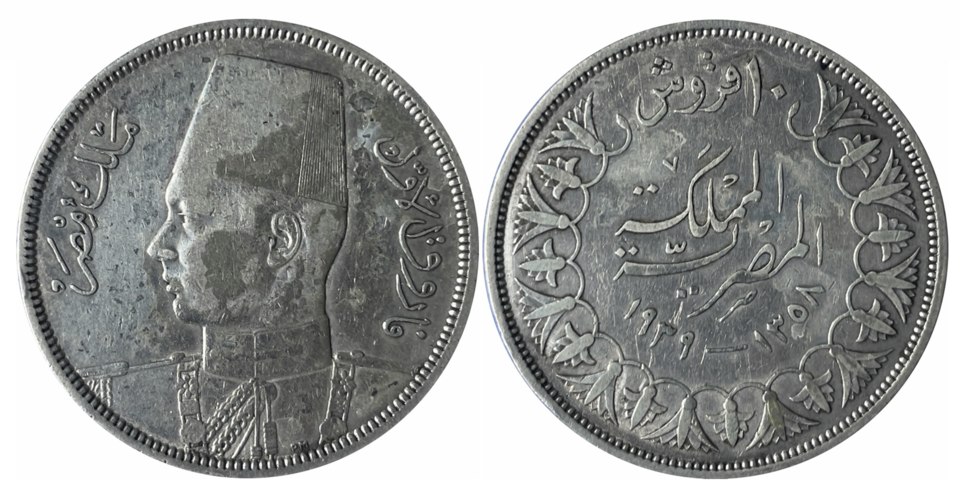

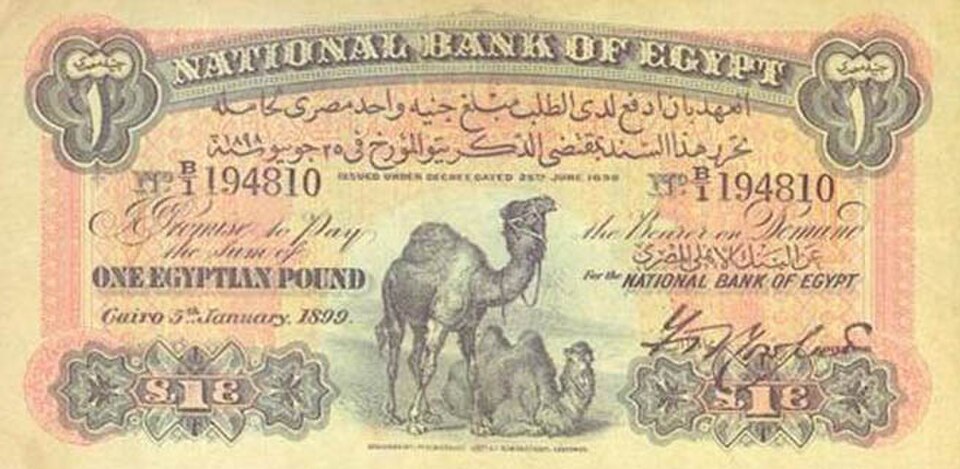

The word “piastre” belongs to that longer regional story. It appears in several monetary systems and is much older than the SSP. Shared terminology does not make the currencies interchangeable or imply an unchanging value. In 2011, South Sudan’s pound adopted familiar monetary language while placing it under a new issuing authority.
3. Sudan’s pound, the dinar and the return of the pound
Sudan’s independence on 1 January 1956 opened another chapter. National money subsequently replaced Egyptian currency; the Bank for International Settlements’ 1958 annual report records the change in 1957. Independence, the date printed on a note and its actual release into circulation are separate events. Treating them as a single date can distort a monetary chronology. [5]
Before the Bank of Sudan opened, monetary responsibilities were divided among institutions including the Sudan Currency Board and the National Bank of Egypt. The new central bank began operations on 22 February 1960. A country could thus issue national notes before the establishment of the central bank familiar from later banknotes. [6]
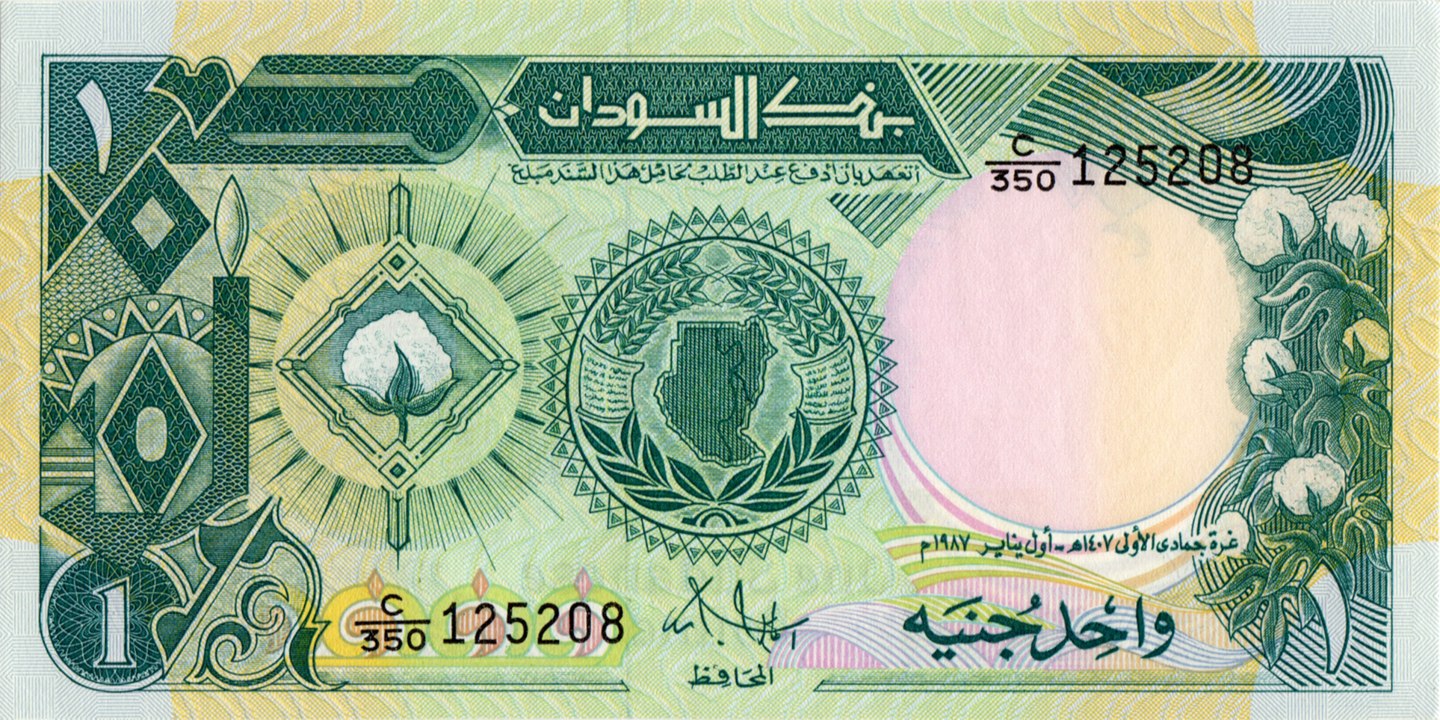

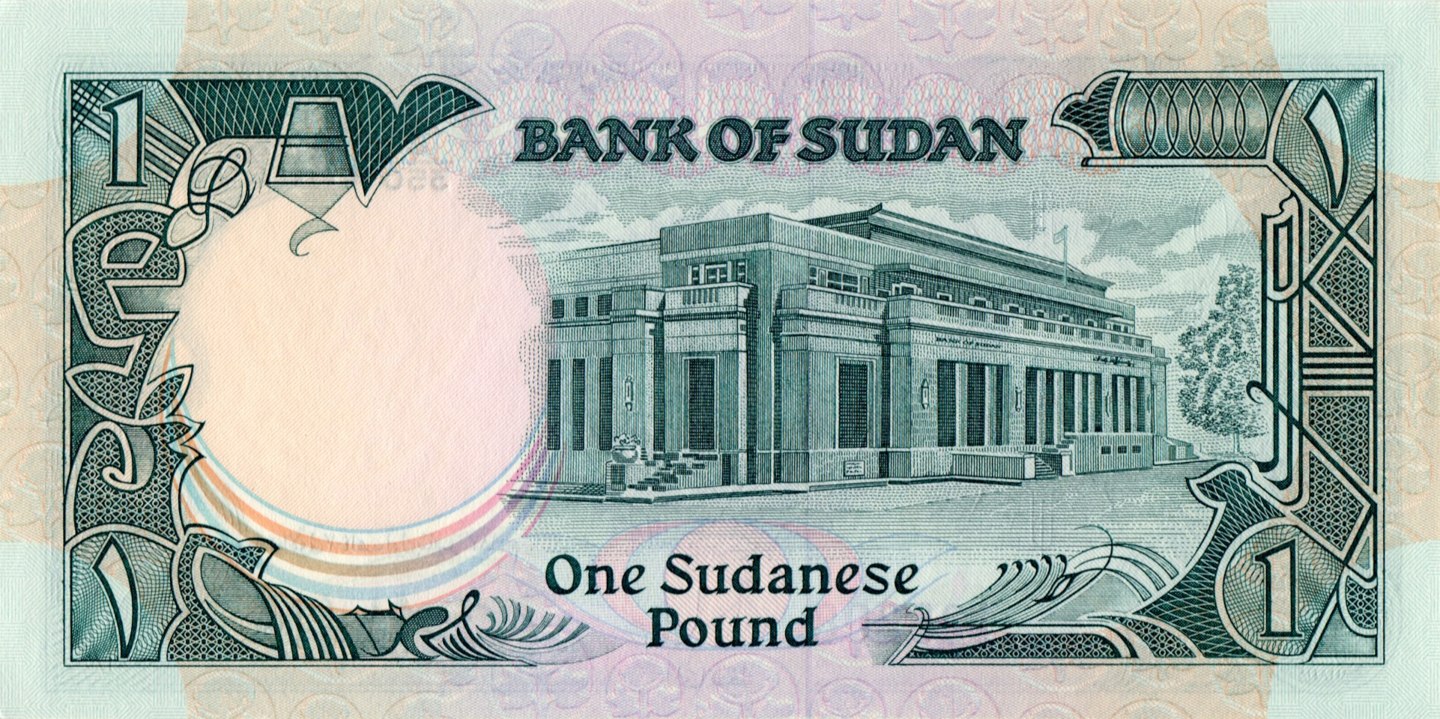
The map on this 1987 one-pound note still includes the territories that later became South Sudan. Cotton appears beside it; the reverse shows the headquarters of the Bank of Sudan. The object preserves an earlier political geography and an official vocabulary of crops, institutions and state authority.

In 1992 the dinar replaced the first pound at one dinar to ten pounds. In 2007 a second Sudanese pound replaced the dinar at one new pound to 100 dinars. This second pound, identified by SDG, was the immediate predecessor of the SSP. The two national pounds should be distinguished, and the 2007 change should not be skipped when explaining what happened in 2011. [7]
4. Autonomy lays institutional foundations
The Comprehensive Peace Agreement of 9 January 2005 ended the long war between the Sudanese government and the SPLM/A. It established an interim period leading to a decision on the South’s future status. Those years involved more than waiting for a referendum: they also provided a setting in which new institutions could take shape. [8]
The Bank of Southern Sudan, established in 2006, operated within Sudan’s central banking framework. Its work included overseeing banking activity in the South and supporting government payments and currency circulation. After independence it became the Bank of South Sudan. In this case, the difference between “Southern” and “South” marks the transition from a regional institution to the central bank of a sovereign state. [9]
Infrastructure and specialist capacity remained limited after decades of conflict. Nevertheless, describing the bank of 2011 as an institution with no predecessor would be misleading. Independence transformed an existing arrangement and added responsibilities: conducting monetary policy, managing a national currency and organising its issue.
5. July 2011: a new currency exchanged at par
South Sudan became independent on 9 July. On 18 July, its pound began replacing the Sudanese pound one for one. Parity simplified the initial exchange between the two units. It did not promise that their values would remain equal indefinitely. [10]
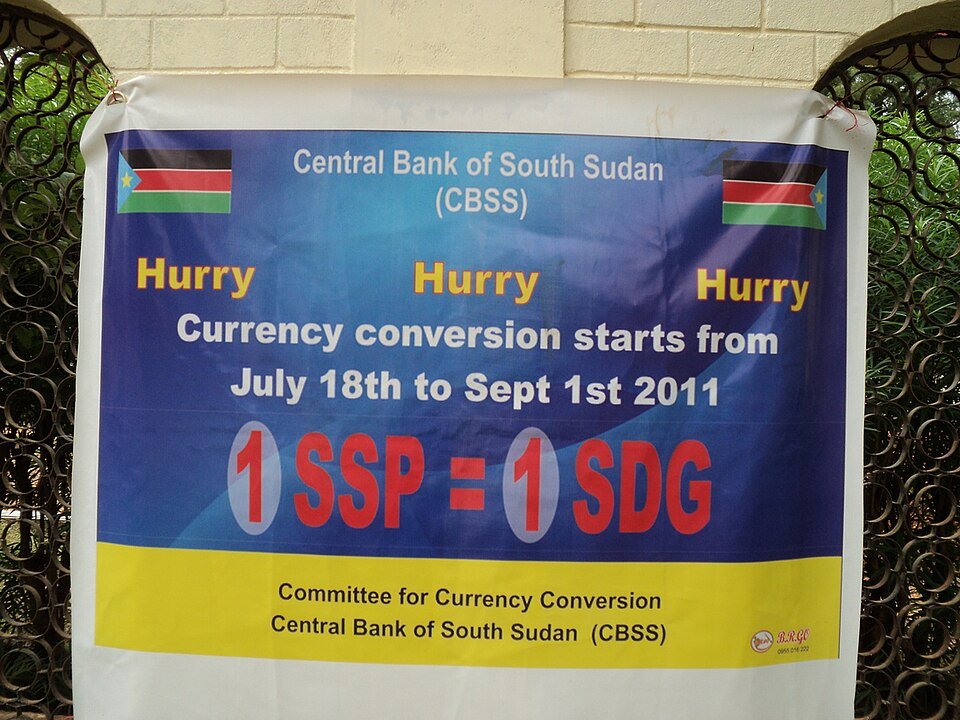

A currency change is a physical undertaking as well as a legal decision. Notes have to arrive, reach distribution points, replace old paper and become familiar to their users. The number on a note may stay the same while its issuer, payment promise and national imagery change.
The inaugural pound denominations were 1, 5, 10, 25, 50 and 100. They were printed by De La Rue. The original 25-pound value is a useful reminder that denomination systems need not always follow a 1–2–5 sequence. Twenty-pound notes were subsequently documented, including specimens dated 2015. A date printed on a surviving note does not, by itself, establish the day on which that denomination was introduced. [10] [11]
6. John Garang: a portrait carrying national memory
The face on the new currency was John Garang de Mabior. Leader of the SPLM/A and a central figure in the 2005 peace settlement, he died in a helicopter crash on 30 July 2005, only weeks after becoming Sudan’s First Vice-President. He did not live to see independence in 2011. [12]
His appearance on the notes should not reduce his political career to secession alone. At his death, the United Nations recalled his vision of a united and peaceful Sudan. The portrait therefore brings different historical moments together: a leader of armed struggle and peace negotiations, who died before the state was founded, became a familiar face of its sovereignty. [12]
On the inaugural one-pound design, Garang’s name appears below the portrait. English wording identifies the issuer and value, while signatures connect the issue to responsible officials. Closely worked patterns and variations in graphic treatment belong to the banknote’s visual language. The official catalogue records these designs; comparison with a screen image cannot authenticate another note.
7. The reverse: a country pictured in miniature
A series of banknotes can act as a pocket atlas. South Sudan’s designs bring together pastoral life, river landscapes, wildlife and underground resources. An engraved animal is not evidence of its present abundance: a currency image may express memory, identity or an aspiration as much as a literal inventory.
| Value | Reverse designs |
|---|---|
| 1 pound | Giraffe and acacia |
| 5 pounds | Cattle |
| 10 pounds | Buffalo and pineapple |
| 25 pounds | Antelopes and oil derrick |
| 100 pounds | Lion and waterfall |
| 500 pounds | The Nile |
| 1,000 pounds | Ostriches |
Based on the central bank’s catalogue. These values belong to different issues, rather than one series released together. [1]
The cattle echo the social forms of wealth discussed earlier. The Nile draws attention to settlement, movement and water. An oil derrick places industrial production alongside animal life. The series gives money more than one voice: its portrait recalls political history, while its reverses offer images of a territory and the resources with which people can identify.
8. Coins: oilfields, wetlands and wildlife
The currency and its coins did not arrive together. In 2015, South Sudan’s small-change programme took material form in 10-, 20- and 50-piastre coins. The central bank describes their compositions and subjects: copper-plated steel with an oil installation, brass-plated steel with a shoebill, and nickel-plated steel with a rhinoceros, respectively. [1]
The shoebill makes a distinctive contribution to this monetary landscape. Its recognisable profile evokes wetland habitats rather than the environments associated with the large mammals. Different coin values distribute different subjects, turning the contents of a pocket into a small collection of national images.
One- and two-pound bimetallic coins add another chapter. The one-pound type depicts two giraffes and the two-pound type a shield. Specimens carry the date 2015 even where catalogues discuss later distribution. Numismatic catalogues attribute manufacture to the South African Mint, in the Pretoria/Centurion area; identifying the manufacturer is a different matter from establishing an official mintage, which this dossier does not claim to do. [13]
Relief, colour, an edge and sometimes two visible metals help distinguish a coin’s denomination. Yet the existence of a type in a catalogue does not tell us how frequently it changed hands. A dated specimen, a collector’s set and the effective availability of coins for everyday purchases are different kinds of evidence.
9. Conflict, oil and purchasing power
The SSP’s history includes severe setbacks. The oil-production shutdown in 2012, the war that began in December 2013 and shocks to foreign earnings weakened the young currency. Dollar revenues and domestic payments in pounds were connected: fewer foreign-currency receipts made imports harder to finance. [14]
For a trader replacing stock, depreciation can increase the cost of the next consignment. For a worker paid in pounds, it can make imported goods less affordable. These mechanisms help explain the experience without treating every rise in consumer prices as an identical fall in the currency’s external value.
On 15 December 2015, the authorities moved away from the fixed exchange-rate regime towards a more flexible arrangement. IMF accounts describe subsequent monetary financing of deficits, pressure on the currency and a return to multiple exchange rates. This chronology is more informative than treating 2018 as the single decisive reform. Financing public spending through money creation increases the money supply without ensuring a corresponding increase in the goods available. [14]
Another reform in 2021 widened participation in foreign-exchange auctions and brought rates closer together. The IMF recorded convergence in August. This was an identifiable historical achievement, even though it did not resolve every difficulty. The currency’s history includes practical reforms as well as periods of crisis. [15]
10. From 100 to 1,000 pounds: history in the denomination mix
The original range stopped at 100 pounds. A 500-pound note followed in 2018. The central bank launched the 1,000-pound denomination on 4 February 2021; the speech was published on its website on 9 February. Preparation had been approved in July 2019. These are different stages in the life of a banknote, rather than competing dates for the same event. [16]
The bank explained that depreciation and inflation had eroded the usefulness of smaller denominations. Paying a large amount required more paper to be counted, carried and checked. A higher-value note reduced that handling burden; its introduction did not by itself restore purchasing power. Adding a denomination was also different from converting all existing pounds into a new monetary unit.
The launch statement emphasised the continuing importance of cash while also discussing electronic payments. It therefore contradicts the claim that the pound had ceased circulating. Foreign-currency use in some transactions is insufficient evidence that a national currency has disappeared. [16]
11. An adjusted name and a continuing monetary heritage
According to the central bank’s official account, the 2023 amendment changed the English currency name from South Sudanese Pound to South Sudan Pound, with notes reflecting that wording issued from 2024. SSP remained the code. A change in the English name should not be described as a redenomination removing zeros. [1]
On 3 September 2026, the bank announced an agreement with De La Rue covering cash-lifecycle management, including planning, quality and circulation. This concerned the organisation of currency management; it did not establish the launch of another banknote series. [17]
Three questions help connect these objects with their history: who issued them, what value do they carry, and which images accompany the monetary promise? A map of the former Sudan, Garang’s portrait, giraffes on a coin and ostriches on a large-denomination note each belong to a particular moment. The pound opens a way into South Sudan’s history, its memories and the practical work required to keep money in circulation.
12. A chronology of the currency
1957 Sudan’s pound replaces Egyptian currency.
1960 The Bank of Sudan opens.
1992 / 2007 The dinar, followed by Sudan’s second pound.
2005 / 2006 Peace agreement and a regional monetary institution.
9 & 18 July 2011 Independence, followed by the launch of the SSP.
2015 Small-denomination coins; exchange-regime reform.
2018 / 2021 Introduction of 500- and 1,000-pound notes.
2023 / 2024 Adjusted English currency name, as reported by the central bank.
Sources and image credits
Documentary review completed on 15 October 2026. Numbered references accompany the text. All displayed photographs are stored locally and remain available offline; institutional links require an internet connection.
- Bank of South Sudan — Bank NotesLaunch, designs and currency name.
- Sharon Hutchinson, American Ethnologist, 1992Research on Nuer wealth categories.
- British Museum — collection Hannah Powell-CottonAzande objects from Yambio.
- Central Bank of Sudan — Currency MuseumHistorical catalogue, especially pp. 6–7.
- Bank for International Settlements — Annual Report 1958Replacement of Egyptian currency in 1957.
- Central Bank of Sudan — About the BankPredecessors and opening on 22 February 1960.
- UNTERM — Republic of the SudanThe 1992 and 2007 currency changes.
- United Nations — Comprehensive Peace AgreementBackground and peace agreement.
- Bank of South Sudan — Key MilestonesThe 2006 institutional foundations.
- Owen Linzmayer — inaugural South Sudan banknotes, 2011Contemporary numismatic record: denominations, parity and printer.
- Banknote News — specimens dated 2015 and 2016Documented 20-pound specimens; printed date distinguished from circulation.
- United Nations — Yearbook 2005, p. 309John Garang, peace agreement and death.
- Numista — South Sudan, 1 pound, N#75284Object description and mint attribution; cross-checked with the two-pound catalogue.
- IMF — Country Report 21/70, 2021Exchange-regime chronology and monetary financing.
- IMF — Country Report 22/266, 2022Reform and exchange-rate convergence in August 2021.
- Bank of South Sudan — launch of SSP 1,000Speech of 4 February 2021, published on 9 February.
- Bank of South Sudan — currency-management agreement, 3 September 2026Cash-management agreement, not an announcement of a new series.
Detailed credits and reuse conditions: image manifest. Modern banknote photographs were excluded where rights to the underlying design could not be established; their imagery is discussed using the sources cited.