A signed promise in a besieged city, a coin struck at Omdurman, cotton on a green banknote: the history of Sudanese money lives in objects as much as in reforms.
01 / SDGBefore the pound: wealth and accounting along the Nile
Long before a Sudanese banknote existed, the Nile carried goods, people and claims to wealth. Kerma and the later kingdoms of Kush stood between Egypt and African trading routes. Gold, ivory, livestock and valued objects moved through relationships shaped by trade, political authority and tribute. These exchanges belong to the background of Sudan’s monetary history, but a gold object is not automatically an early version of the national pound.
Historical Nubia extended across land now divided between Sudan and Egypt. Modern borders should not be projected backwards onto those networks. Kerma, Napata and Meroë help us understand the region’s rich commercial past without inventing an uninterrupted succession of national currencies.
A price in money need not mean payment in coins
For medieval Nubia, documents from Qasr Ibrim have challenged an older picture of an economy largely confined to barter. They reveal prices, obligations and references to gold or silver within transactions that could also involve payment in goods. Finding few coins in excavations does not, on its own, demonstrate that people lacked monetary ways of valuing property or settling debts.
This distinction matters throughout the story: an accounting unit measures value, a physical object makes a payment, and an institution establishes the rules. Those functions can come together, but they do not necessarily develop at the same moment.
02 / SDGA nineteenth-century crossroads of currencies
The Turco-Egyptian conquest of 1820–1821 strengthened administrative connections with Egypt. It did not create a single uniform payments market across Sudan. Money followed the river, caravan routes and the Red Sea, while local practice depended on trading partners and location.
Egyptian currency circulated alongside silver trade coins. The Maria Theresa thaler, familiar far beyond Habsburg territory, illustrates how a piece could be valued for its metal and established reputation rather than the authority of the ruler it portrayed. A Sudanese academic study of currency circulation published in 2025 describes this variety rather than a single imagined precolonial currency.
The word piastre, also encountered as qirsh or qurush, appears across different systems. Its presence on two objects does not establish the same weight, metal content or practical value. Understanding the issuer and the monetary setting comes before translating a denomination.
03 / SDG1884: a promise to pay in besieged Khartoum
In 1884, Charles George Gordon returned to Khartoum as governor-general during the uprising led by Muhammad Ahmad, the Mahdi. The besieged city issued emergency paper money. A 2,500-piastre example preserved in the Powerhouse collection provides direct evidence of these notes signed by Gordon.
The 1,000-piastre note shown here belongs to the same emergency-money story. It was not issued by an independent Sudanese central bank. Its authority rested on a written promise, administrative seals and whatever confidence the issuer could command in an isolated city.
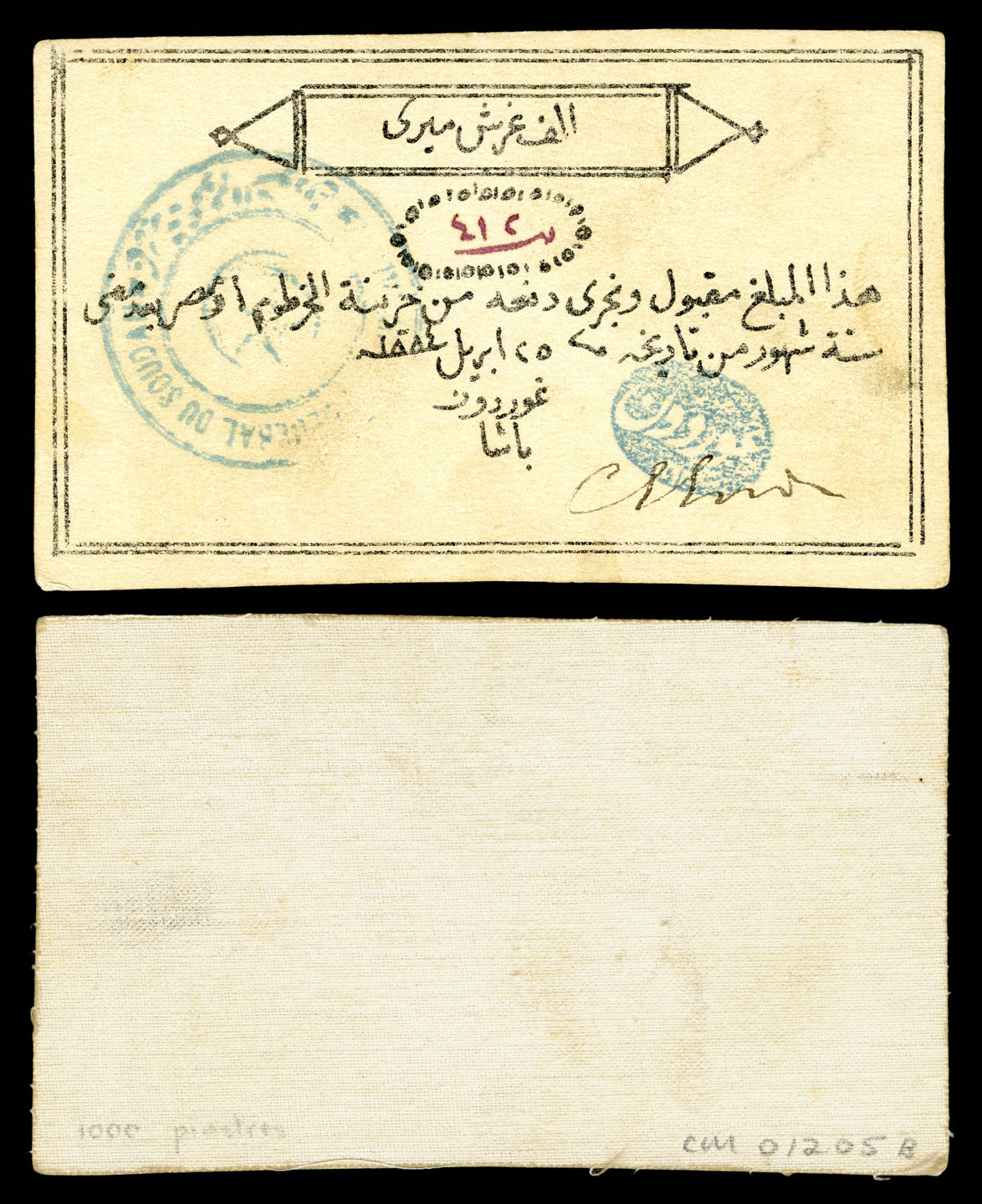

Its appearance is strikingly spare compared with later banknotes. There is little colour and no expansive national landscape: writing and seals do most of the work. Paper helped sustain payments as access to metal money and outside communications became difficult. Khartoum fell in January 1885; the surviving note records an administrative order approaching its end.
04 / SDGThe Mahdist state: authority struck into metal
The Mahdist movement also issued coins. The British Museum preserves examples attributed to Muhammad Ahmad, including issues struck at Khartoum. Following his death in 1885, his successor Abdallahi ibn Muhammad continued building the state from Omdurman.
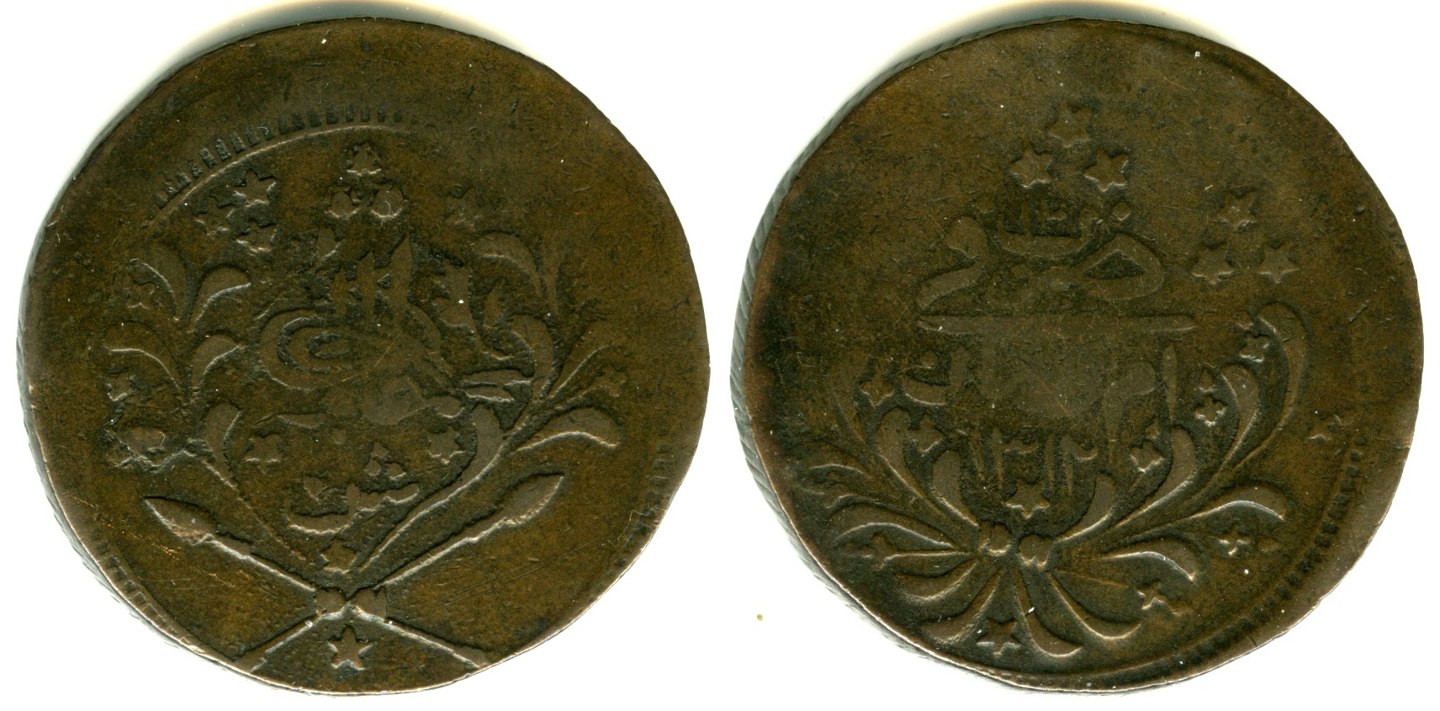

The 20-qurush coinage makes the political role of money particularly visible. Inscriptions, dates and mint names placed authority into circulation. Yet an official face value did not settle every question of acceptance. Changes in silver content and merchants’ responses also mattered. Research on the Mahdist treasury shows the tension between the state’s ideological ambitions and the practical task of funding its activities.
For collectors, an Arabic date or a regnal year cannot always be turned into one straightforward Gregorian year. Types and variants coexist. The photographed example is therefore identified by its reign rather than assigned an individual date that the available evidence does not securely establish.
05 / SDG1899–1960: from Egyptian money to a national institution
Following the defeat of the Mahdist state, the Anglo-Egyptian condominium was established in 1899. The Egyptian pound played a central role in circulation. British rule did not mean that sterling was simply renamed the Sudanese pound: the shared English word must not obscure distinct issuers and monetary arrangements.
Why both 1956 and 1957 appear in the story
Independence on 1 January 1956 began a new institutional chapter. The central bank’s museum groups the earliest national issues under 1956. The Bank for International Settlements’ 1958 annual report dates the replacement of Egyptian currency by the new Sudanese currency, at par, to 8 April 1957. An issue date, the creation of a currency arrangement and the effective replacement of circulating money are different historical markers.
The first pound, subsequently identified by the code SDP, was divided into 100 piastres, with smaller values in milliemes. Bronze and copper-nickel coins remind us that national money must make small everyday payments possible as well as settle large accounts.
BIS · 1958 · Deutsche Bundesbank · CBOS · Museum
Mamoun Behairy and the Bank of Sudan
The Sudan Currency Board initially handled issuance. The 1959 legislation then prepared the way for a central bank, which opened on 22 February 1960 with Mamoun Behairy as its first governor. Functions previously spread between different bodies and the National Bank of Egypt were brought together. The issuer’s name on a banknote is one clue to that institutional change.
06 / SDGBanknotes as a portrait of the country
Sudan’s notes show more than changing governments. They offer images of work, movement and public institutions. The 1987 one-pound design brings together cotton, a national map and geometric ornament. Its English face depicts the Bank of Sudan headquarters, giving monetary authority a recognisable architectural form.
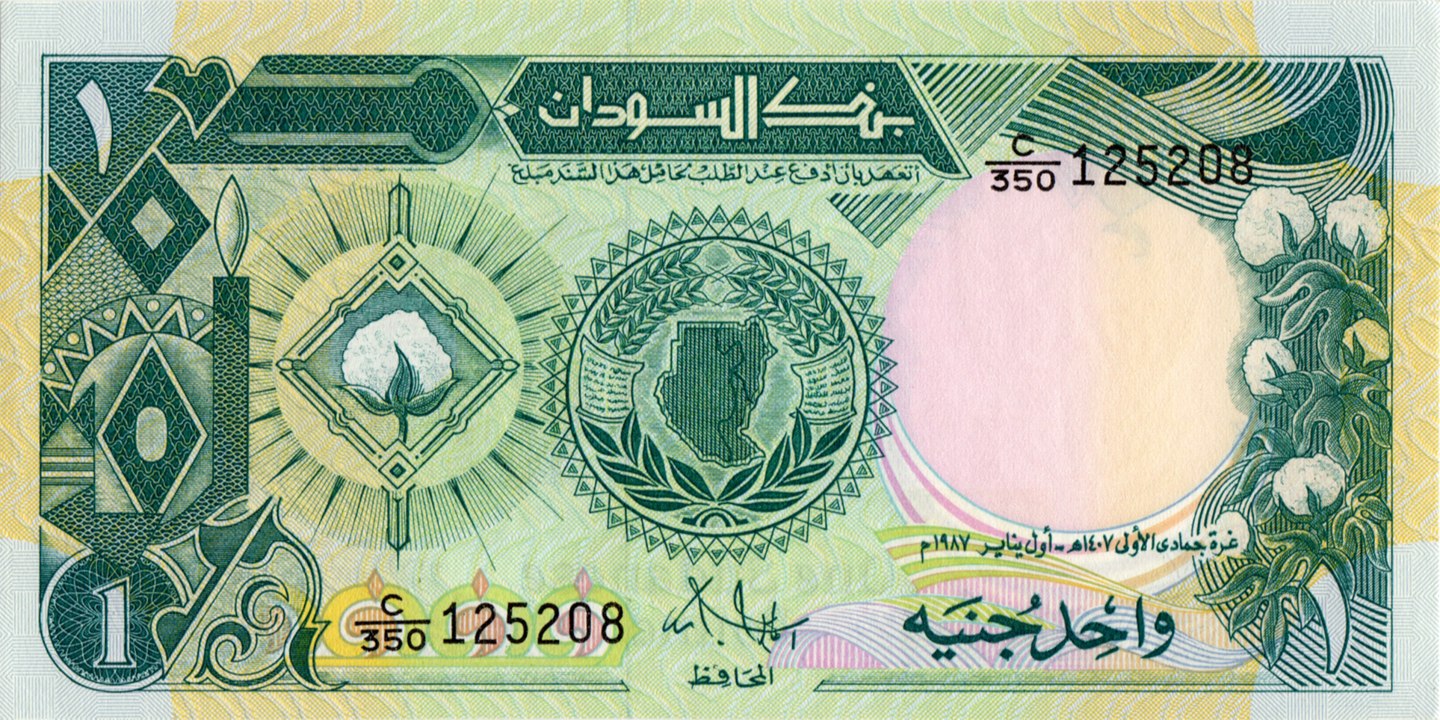

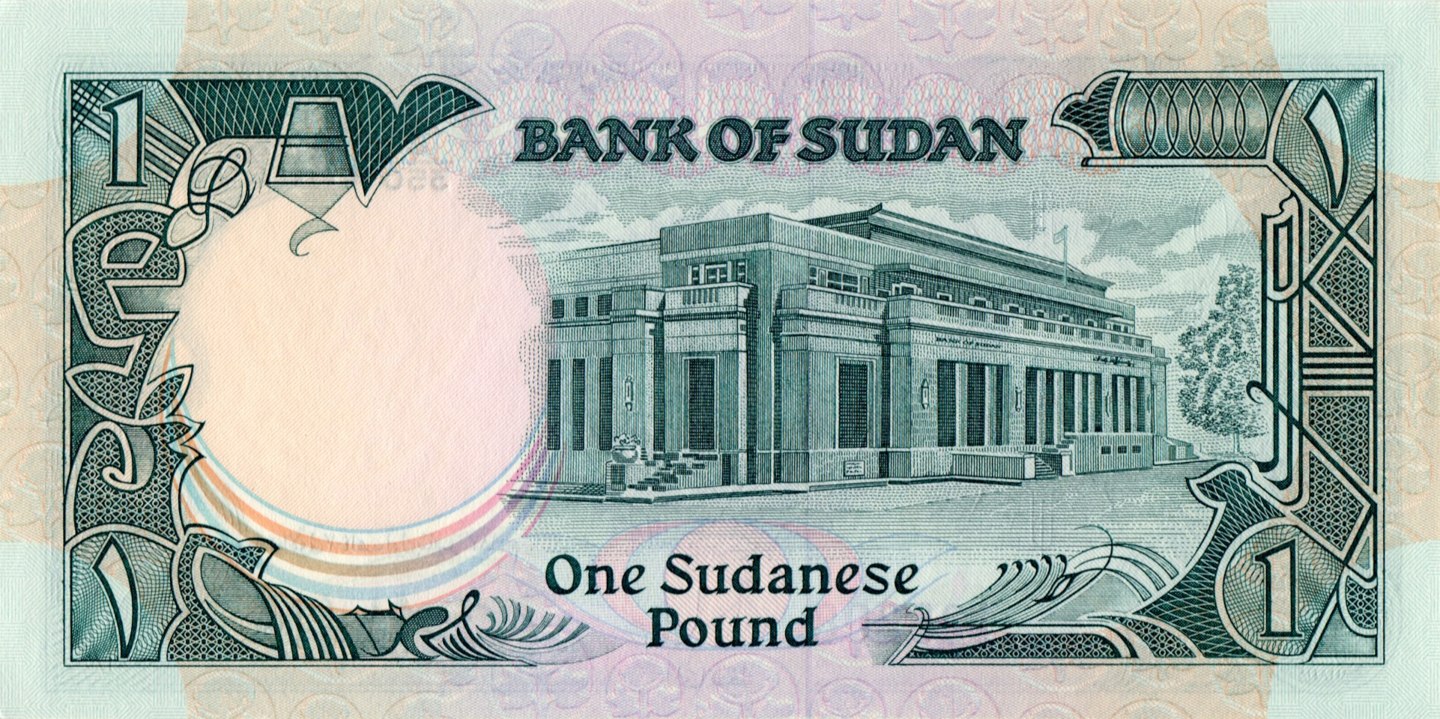

The map deserves attention: it depicts Sudan before the separation of 2011, locating the object within a political geography that has since changed. Cotton points towards a longstanding agricultural activity. Reading these details opens a view of the country beyond accounts centred exclusively on economic crises.
A quarter-pound in paper
The 25-piastre note from the same period provides another perspective. A quarter of the old pound was still issued as a banknote. Camels and a map occupy one face; the bank building occupies the other. Arabic and English identify the same instrument of payment on its two sides.
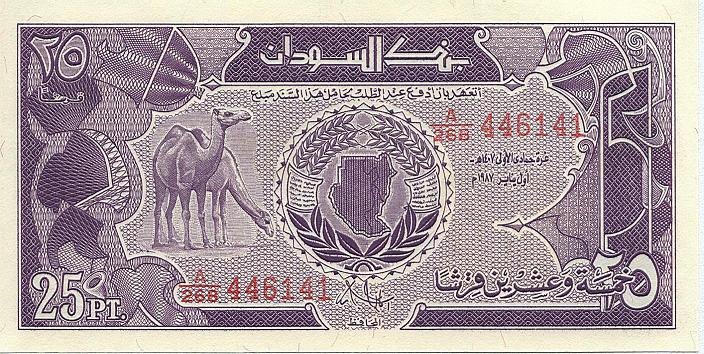

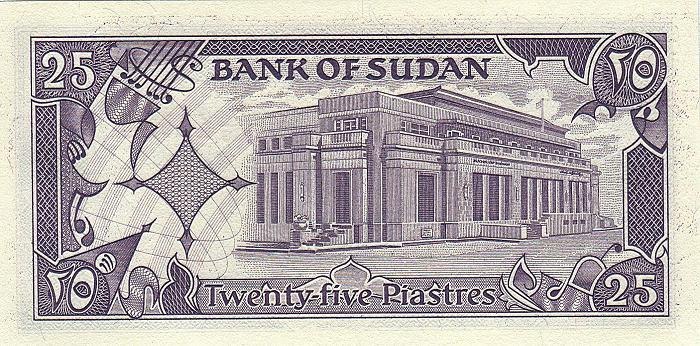

This is why both faces matter in a historical collection. Showing only one would lose either the national imagery or the English institutional identity, along with part of the arrangement of values. Signatures, serial numbers and watermark areas also help distinguish issues and varieties. A banknote is an organised document as well as a picture.
07 / SDG1976: a remarkable bird on an unusual denomination
A 2½-pound coin dated 1976 stands apart from the small change used for ordinary purchases. Its unusual denomination invites closer examination; its shoebill directs attention to the natural heritage of the region’s wetlands.
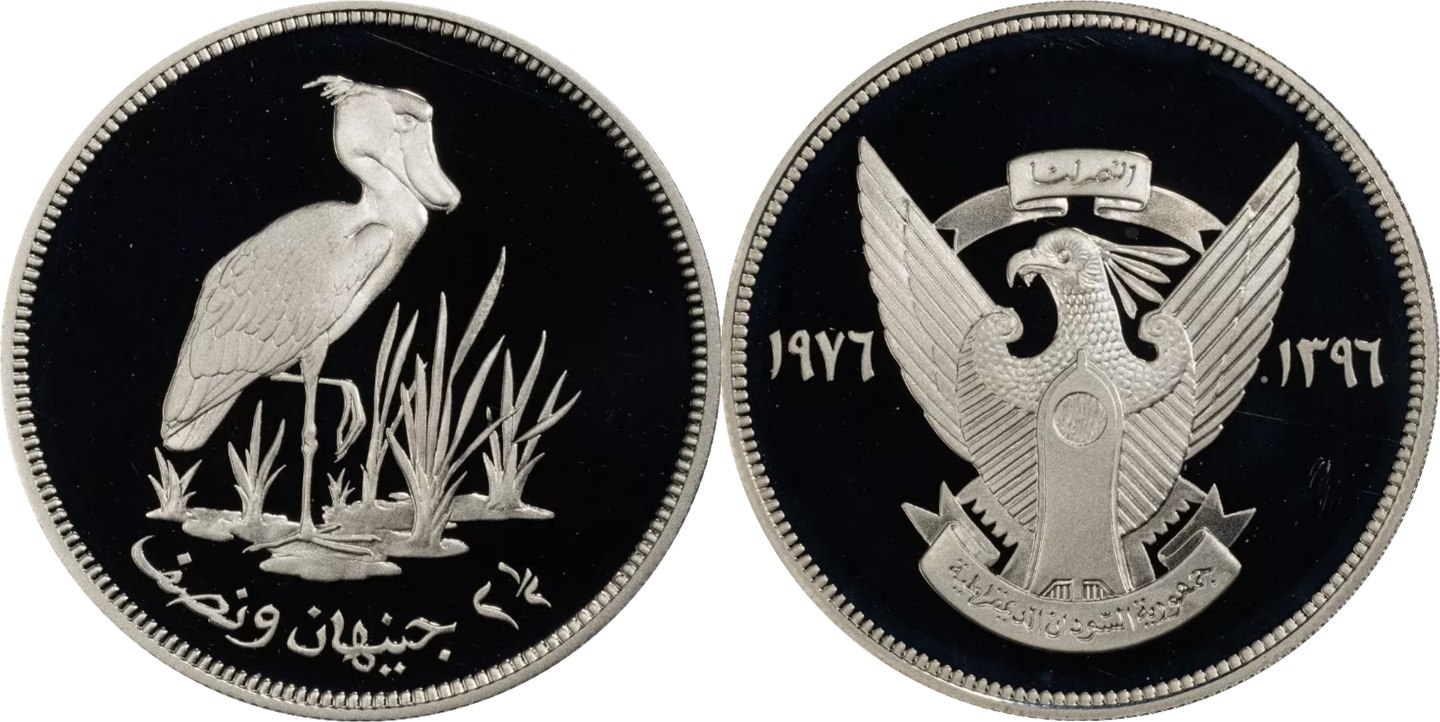

The other face carries the national emblem with a secretary bird spreading its wings. These are two different birds performing different visual roles: one is the wildlife subject of the issue, while the other belongs to national heraldry. Treating them as interchangeable would miss the point of the design.
The relief, beaded border and contrast between surfaces also reveal decisions involved in making a collector coin. Such an object should not be taken as evidence of what every shopper carried in 1976. Collecting and everyday circulation are different uses of money. The photograph documents this particular object; it does not by itself establish its mintage or manufacturing mint.
08 / SDG1992–2007: the dinar and the making of banknotes
In 1992 the dinar, code SDD, progressively replaced the first pound at 1 dinar for 10 SDP pounds. The reform took place under Omar al-Bashir. Its political setting matters, but regional payment practices cannot all be explained as expressions of a single identity.
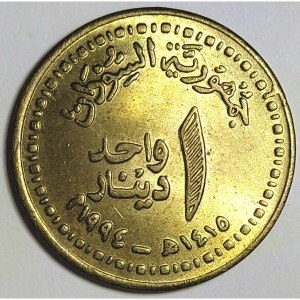

The small one-dinar coin photographed here, dated 1994, makes the new unit tangible. Reducing the size of numbers can simplify accounting without creating additional wealth. If a price of 100 old pounds becomes 10 dinars, both prices and the sums people hold undergo the same conversion.
CBOS · Museum · Deutsche Bundesbank
Printing within Sudan
Sudan Currency Printing Press states that it began domestic banknote printing in 1994. This industrial milestone is separate from the introduction of the dinar two years earlier. The company also describes improved papers and security devices used for higher dinar denominations.
Three roles should be kept distinct: the central bank authorises and issues money, a printer manufactures notes, and a mint strikes coins. A one-dinar coin and a thousand-dinar note belong to the same currency system but require different equipment and skills.
09 / SDG2005–2007: a pound intended to support peace
The 2005 Comprehensive Peace Agreement provided for a new shared currency. In its policies for 2007, the central bank announced designs intended to convey peace, unity, development and cultural diversity. The new SDG pound entered circulation in January 2007, followed by a phased replacement programme.
The official policies allowed temporary circulation alongside the dinar and provided for withdrawing other currencies used in the South, including the old pound. This diversity explains the ambition of the reform: to rebuild a shared monetary reference where war had separated payment networks.
1 SDG pound = 100 SDD dinars = 1,000 old SDP pounds.
A purely accounting example: 5,000 SDP pounds become 500 dinars and then 5 SDG pounds. This is neither a market exchange rate nor an increase in purchasing power.
The central bank’s 2007 annual report confirms the conversion of 100 dinars to one new pound. Bringing back the old name did not restore the first pound’s value. The currency codes distinguish units that everyday speech might simply call “pounds”.
10 / SDG2011: two countries and two pounds
South Sudan became independent on 9 July 2011 and introduced its own currency, the South Sudanese pound, code SSP, issued by the Bank of South Sudan. Sudan retained the SDG pound. The shared name does not make the currencies interchangeable.
Sudan also introduced replacement banknotes in July 2011, at par with the previous series. This was a change of notes, without the removal of two zeros seen in 2007. Some accounts describe a “third pound”; for understanding accounts and prices, the essential point is the continuity of the SDG unit.
Bank of South Sudan · IMF · Metadata
Separation profoundly changed Sudan’s external earnings and public finances. In 2012 the IMF described the loss of oil revenue and the resulting pressures on reserves and the currency. Shares of oil production, export receipts and government revenue should nevertheless be distinguished: they measure different things.
For households, changing notes added a practical issue to the transformation of borders: which paper could be deposited or exchanged, and through which institution? National designs, banking networks and the recognition of cash became closely connected.
11 / SDGFrom recent reforms to the note dated June 2024
The transition that began in 2019 included economic reform efforts. In February 2021, the IMF welcomed the unification of official and parallel-market exchange rates. This did not introduce a new currency unit: accounts continued to be expressed in SDG.
The war that began on 15 April 2023 subsequently disrupted payments, banking access and the movement of goods. UNICEF’s analysis shows how fiscal and monetary disruption affects services and households. Monetary history is about more than an inflation percentage: reaching a bank branch or completing a transfer can become as important as possessing notes.
A design date is not an announcement date
On 9 November 2024 the central bank announced a new 1,000-pound note dated June 2024. Its imagery includes a port, a grain silo and gold bars, with the central bank on the back. The announcement distinguished the notes being replaced, deposits into bank accounts and the future end of their legal-tender status.
A circular of 23 December 2024 extended the exchange programme. Withdrawal therefore needs to be understood through successive decisions. These documents are historical landmarks, not a guarantee of which notes were accepted everywhere in October 2026. The institution’s stated reasons for replacement remain its own account.
12 / SDGRecognising money and reading its history
| Date | Unit or issue | What changed |
|---|---|---|
| 1884 | Siege paper, in piastres | A local emergency issue |
| 1956–1957 | First pound, SDP | National issues; Egyptian currency replaced at par |
| 1960 | Bank of Sudan | A central bank takes over issuing functions |
| 1992 | Dinar, SDD | 1 SDD = 10 SDP |
| 2007 | New pound, SDG | 1 SDG = 100 SDD |
| 2011 | Replacement Sudanese series | At-par replacement; separate SSP in South Sudan |
| 2024 | Redesigned 1,000-pound note | A new type and a withdrawal operation, not a new unit |
Four clues to examine
Start with the issuer’s name, then read the unit, date and imagery. Identical face values can belong to entirely different monetary systems. A map, building or crop can then reveal the territory and ambitions of a particular period.
The Sudanese pound brings together several histories: Nile Valley exchange, sovereignty and the everyday acts of making payments. Surviving objects make these transformations visible without reducing Sudan to the difficulties of its recent past.
All photographs are stored locally and can be viewed offline. Recent series are described using official documentation. Since the reproduction status of currency designs released after 18 December 1996 remains uncertain in the material consulted, their images are not reproduced here.
Sources and credits
Documentary research checked on 15 October 2026. External links lead to references; the story and photographs can be read without an internet connection.
- Mission archéologique suisse de Kerma — History
- Metropolitan Museum of Art — The Land of Nubia
- Giovanni R. Ruffini, Medieval Nubia: A Social and Economic History, Oxford University Press, 2012
- Geoffrey Khan, Arabic Documents from Medieval Nubia, 2024
- Université internationale d’Afrique — histoire de la circulation monétaire au Soudan, 2025
- Powerhouse Collection — 2500 piastres, Khartoum, 1884, objet 2009/2/1-1
- British Museum — monnaies de Muhammad Ahmad al-Mahdi
- Ahmed Ibrahim Abushouk, Ideology Versus Pragmatism — the Case of the Mahdist Public Treasury in the Sudan (1881–1898)
- Banque des règlements internationaux / BIS — 28th Annual Report, 1958
- CBOS — monnaies après l’indépendance / post-independence currency museum
- CBOS — About Central Bank of Sudan
- CBOS — Banknotes, catalogue historique
- Sudan Currency Printing Press — Our Achievements
- CBOS — Policies for 2007, Fourth Pillar (28 December 2006)
- CBOS — Annual Report 2007, conversion SDD/SDG
- Bank of South Sudan — Key Milestones
- IMF — Exchange Rate Database, Country Notes (Sudan)
- IMF — 2012 Article IV Consultation with Sudan
- IMF — Press briefing, 25 February 2021, exchange-rate unification
- UNICEF — The Impact of Sudan’s Armed Conflict on the Fiscal Situation and Service Delivery, 2023
- CBOS — communiqué du 9 novembre 2024 / announcement of 9 November 2024
- CBOS — circulaire 4/2024, prolongation de l’échange / exchange extension, 23 December 2024
- Wikimedia Commons — Banknotes of Sudan, statut des dessins monétaires / currency-design status
- Deutsche Bundesbank — Metadata on exchange rate statistics, Sudan
Image credits appear with each caption. The images-manifest.json file records sources, licences and processing. CC BY-SA photographs retain that licence; it does not automatically apply to the article’s original text.